Highlights
I am Elena Koleva, expert consultant covering all topics regarding your Study in Germany.
Let the numbers roll and speak for themselves
Years of experience helping you find the right University
Happy young people succeeded trusting my professionalism and loyalty
German universities accommodating my applicants
Majors studied with my help
Success rate and satisfaction with my services
Of my own children graduated in Germany and launched their careers in Germany and USA
Key Facts
All you need to know about the German experience at a single glance
Academics
World class academic standards
- Bachelor, Master and German specific degrees. Opportunities to study in German and/or English
- 2082 English Programs available
- Leading in Science, Technology, Engineering and Mathematics (STEM) programs
- Over 370,000 international students
Costs of Studying and Living
Free education for everyone
- $150-450 fees per semester, including registration fee, students' union fee, and public transport ticket
- $800 per month for room and board, health insurance, phone, internet
- Option to offset the cost of living with 120 full days or 240 half days per year of work permitted
Why Germany
Safe country with economic and political stability
- Largest economy in Europe & the 3rd largest in the world
- High levels of employment; unemployment rate only 4.2 %
- Excellent healthcare system available to everyone with one of the lowest death tolls in the world during the Coronavirus pandemic
- 101 million German speaking people worldwide
Fun Facts
Highways with no speed limit
- One of the world's largest car producers
- The oldest University here, established in 1386, is Heidelberg University
- Over 100 Germans have been awarded the Nobel Prize
- Germany has over 400 zoos, the most in the world
- Chancellor Angela Merkel is the world's second most powerful person and has a Barbie doll made after her
Prospects
Here is what your future can look like. Reap the benefits
Professional realization
Choices to work in Germany, USA or wherever you want in the world
No student loans
Starting from Zero is better than a debt of thousands of dollars in student loans and a low credit score
Home ownership
Earning money after graduation without having student loans can help you buying a house sooner
Family prospects
Financial stability aids in starting a family and reducing worries
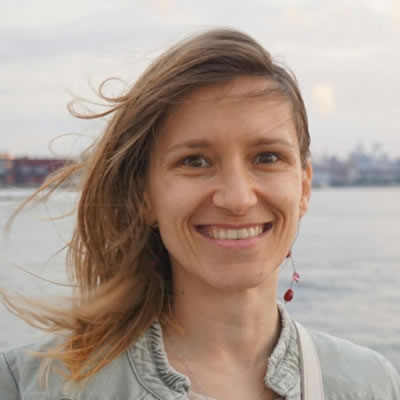
Ana Koleva
Architect
Thanks to the expertise of my mother and the support of both my parents, I have been given a solid start in life. I graduated with a Bachelor's and a Master's degree of architecture at Brandenburg University of Technology Cottbus with an exchange year at the University of Virginia. My education has led me to become a licensed architect in the US and I am currently working for a 300+ architecture firm in New York City as a Project Architect.

Vasil Kolev
IT Project Manager
With my mothers help and advise at the application process, I graduated with a Bachelor's degree of mathematics at Ruprecht Karl University of Heidelberg and a Master's degree of computer science and economics at University of Mannheim. Now I'm Lead IT Project Mangaer at REWE, one of the biggest grocery chains in Europe. I know the dedication and care my mother approaches every individual applicant with. Without any reservations, I highly recommend her services. Her impeccable success rate speaks for itself and certainly has impacted my path in ways I could not have dreamed of.
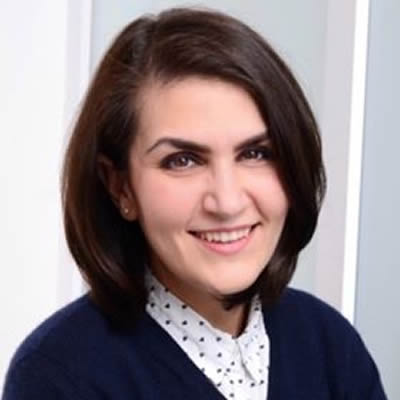
Polina Petkova
Medical Doctor
I received a full service package from Elena Koleva recommended to me by a friend. She helped me find and apply in a university to start learning German, find a dorm and connected me with her network of students. A year later, with her professionalism and unmatched competence Elena assisted in my acceptance in the Charité - Universitätsmedizin Berlin, Europe's largest university teaching hospital. Currently I specialize in clinical research of diabetes and obesity in Profil Institute for Metabolic Research.

Igor Emets
Senior Investment Advisor in Finance, Capital Markets
My deep thanks to Elena Koleva for the extensive information and her spot on recommendations in selection of universities and program of study entirely held in English. I received my Bachelor's degree in Deggendorf. In order to make the best choice of where and in what program to continue my education, I once again reached out to Elena for her services and guidance. I was accepted and received my Master's degree in finance at the Frankfurt School of Finance and Management. Currently I work in the largest asset management company in Russia Alfa Capital. The value of the portfolio I manage is ₽ 1.2 Billion.
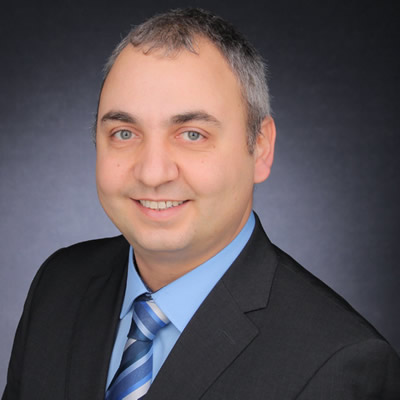
Nikolay Boev
Ph.D. Mechanical Engineer
Given my desires and wishes Elena prepared the best options providing me with the highest chances for success. The preparation of paperwork for the applications was organized and impeccable and her contributions were priceless. I graduated whit a Master's degree of mechanical engineering at KIT, Karlsruhe Institute of Technology in 2010 and received my Ph.D. in 2014. During my studies I interned at Audi AG in Ingolstadt. Currently I work in Cologne at RWE AG as a Data Scientist.
Services
Select a package for your needs at any stage of your application process
Introduction
- Getting to know each other
- Discussing your personal motivation and your posibilities
- Up to one hour typical duration
Consultation
- Discussing in detail any topic of your choice such as
- University selection
- Program selection
- Language requirements
- Application process
- Dorm selection
- Living in Germany
- One hour typical duration
Documents
- Assistance in collecting all necessary documents after your selection of program and universtiy
- Guidance for creation of resume, motivation letter and portfolio as needed
- Paperwork preparation for specific university requirements
- Translation, notarizations and apostille of all documents as necessary
- Organizing and filling the application forms and documents
Full Package
- Guidance and detailed information about programs of study and universities for you to choose from
- Evaluation process of the foreign diploma to the German system
- German language courses selection and application when required
- Preparation and submission of all necessary application documents
- Filling dormitory applications
- Support along the whole enrolment process
- Assistance and tips for a successful beginning in your new life as a student in Germany
Frequently asked questions
Facts and frequently asked questions about studying in Germany
-
Is the education indeed for free?
As a rule, state higher education institutions do not charge tuition fees for Bachelor's and for the most of Master's degree courses.
There is one exception: since the 2017/18 winter semester, one of the sixteen federal states, the state of Baden-Württemberg, has charged non-EU citizens tuition fees of 1.500 Euro per semester for their academic study (Bachelor's and Master's degrees). -
How much should I pay at the top-ranked universities per semester?
For winter semester 2020/21:
- Ludwig Maximilian University of Munich - 142.40 Euro (including the six months student ticket with some time restrictions for public transport in Munich)
- Heidelberg University - 171.75 Euro per semester + 1.500 Euro for students from countries outside the European Union (EU); if they wish students can purchase a ticket in amount of 175 Euro for six months.
- Technical University of Munich - 142.40 Euro (including the six months student ticket with some time restrictions for public transport in Munich)
- Humboldt University of Berlin - 315.64 Euro (including the six months student ticket for public transport in Berlin)
-
What will my monthly outgoings be?
According to the German National Association for Student Affairs (Deutsches Studentenwerk):
The cost of living depends on your lifestyle. However, you cannot influence the average rents or the cost of food and health insurance! So, just being thrifty is not going to help!
The largest monthly expense for students is the rent - mostly a third of their total cost of living.
Yet there are sometimes big differences in the cost of living within Germany. In the big cities such as Munich, Hamburg or Cologne the rents are the highest. Students pay on average 374 Euro per month there. In Jena, Dresden and Leipzig the average rents, at 264 Euro, are the cheapest. On the other hand, it is easier to find a job in the bigger cities. -
What do German students spend their money on?
On average German students have about 918 Euro at their disposal (source: 21. Sozialerhebung, 2016):
- 323 Euro - Rent (incl. additional charges)
- 168 Euro - Food
- 42 Euro - Clothing
- 94 Euro - Transport (car/public transport)
- 80 Euro - Health insurance
- 31 Euro - Telephone/internet/radio & TV licence
- 20 Euro - Work/study materials
- 61 Euro - Leisure activities
- 819 Euro - Total
Not included here are term fees which have to be paid on receipt of confirmation of admission. So, especially at the beginning of term you will have more expenses than usual.
-
Do I have a health insurance during my study?
You must have health insurance which is recognized in Germany for the early period of your stay there in order to apply for a German preparatory course or to enroll at a university. Then, you can switch to the mandatory German health insurance scheme. As a rule, you can expect to spend from 50 to 120 Euro a month.
-
Work Permission?
International students who do not come from the EU or EEA are allowed to work 120 full or 240 half days in a year. They are not allowed to go self-employed or work freelance!
Students from the European Union and the EEA have free access to the German job market.
The general statutory minimum wage is about 10 Euro gross per hour. -
Preferences for Field of Study?
Students by field of study (source: 21. Sozialerhebung, 2016):
- 21% - Engineering
- 18% - Languages and cultural studies
- 20% - Mathematics / natural sciences
- 6% - Medicine, health science
- 21% - Law and economics
- 15% - Social sciences / social services / psychology / education
-
How many semesters per year are there?
At German universities, the academic year is divided into two semesters: winter (October to March) and a summer semester (April to September). This period includes semester breaks, so the actual term time for lectures and seminars is shorter.
The semester breaks may include examinations, intensive courses or internships. However, you can find time to go on holiday or find a student job. -
What are the university admission requirements?
To be admitted at a German university, your school leaving certificate must be recognized as equivalent to the German higher education entrance qualification.
You have to take a year of preparation and an assessment test in case that your certificate is not recognized as equivalent.
Contact
Please feel free to contact me any time
Social Profiles
Email Me
info@studyingermanyconsult.com
Call Me
+1 917 929 5652